Showing posts with label regional wine week. Show all posts

Saturday, October 15, 2011

Moonlight Meadery – Liquid Gold from New Hampshire


I’ve heard enough feedback about mead in the last eight years that I can say you either like mead or not, but all too often the mind is made up from only one style of mead; and there are many to try. I invite anyone who hasn’t experienced mead or enough of it to come and give it a try.

As a home brewer, cidermaker and winemaker I’ve also dabbled in mead. Early on I learned that mead has different names depending on what it is made with. I’ve made mead twice, two more batches are in the queue to start next month, and have yet to cover all the primary styles. Below is a concise overview of those styles. There are many other variations and names for mead.
  • Traditional – water, honey and yeast. That’s it. People interested in mead should try this style to get a baseline for what wine made from honey tastes like. All of the rest of the variations below are riffs on this, using the honey, water and yeast as the starting point.
  • Metheglin – contains spices. I made an Orange/Vanilla mead this year that is technically a metheglin. The orange was low volume and the vanilla is a predominant flavor in the finished product. Other spices like cinnamon, clove, nutmeg, tea and ginger are all commonly used. My first mead was a Blackberry with nutmeg so either a metheglin or melomel (up next).
  • Melomel – made with fruit. Next to traditional mead this is the second most popular type in my experience. Berries, cherries, currant, mango, etc. These can come dry or sweet depending on the maker’s preference. If made with apples and grapes, see below.
  • Pyment – made with grapes or grape juice. I’ve only had a few of these, one just last night in fact that was rockstar, and this is an area I will experiment with in the coming years. If oak aged it can have a port-like character.
  • Braggot – made with hops and/or malt. Another variation I’ve only had a couple of times, but has intense character. The best one I've had came from Michael at Moonlight Meadery (we’re getting to he and his meads!) and was in an Imperial Stout form. Another area for potential experimentation for me.
  • Cyser – made with apples or cider. I am making one of these next weekend, with some cinnamon. Sort of baked apples perhaps.
I wouldn’t know nearly as much as I do about mead and what it can be if it wasn’t for Michael Fairbrother and Moonlight Meadery. I’ve already said many glowing things about Michael and Moonlight Meadery in this blog, but they are all very much deserved. The breadth of styles and flavors presented in the products really does offer something for everyone; also representing a lesson in the varied styles of mead. Michael is a passionate meadmaker and business person who regularly tells me in a humble and unassuming way that the growth and interest in this very new business has been way beyond his original expectations. Moonlight is growing and expanding rapidly, outgrowing smaller brewing equipment several times just this year, seeing a deluge of orders and starting to add full-time staff to answer the call of the thirsty consumer. Moonlight Meadery is the first winery in New Hampshire to have distribution in California. Michael and his award winning meads came from the community of home brewers in New Hampshire, aptly named Brew Free or Die, a group he continues to support and give back to. 

( Micheal Fairbrother explaining to my parents how the meads are made. )

The best way to continue to shower Moonlight Meadery with well deserved accolades is to review two of their products. I’m already a convert to the meads from Moonlight, but as any frequent reader of my blog will know, I tell it like I see it and don’t say positive things just because.Check out Moonlight Meadery's full product line at http://www.moonlightmeadery.com/content/our-meads

Utopian

When I first had this product described to me I was pretty sure it was going to be a magical experience. Why? It is mead aged in the oak barrels that had been previously used to age Utopias, a super-premium beer from the company behind the Sam Adams brand. Knowing what aging in spent barrels has done for many beer and spirits makers I had no doubt something of interest was in store.

The mead pours a brilliant gold color with a hint of a shift to orange/brown, something I am going to guess comes from the oak aging. The nose is huge of honey, baked fruits and spices. The mouth is a bit spicy as well, with dried fruits and an obvious spirit like quality to it. There is sweetness here, but it is needed due to the complexity of the fruit and spice flavors. This is the most complex mead I have ever had and the complexity lingers straight through the finish. The perception of the alcohol is an asset in this drink, elevating it to a place where you think you are drinking aged spirits. I’ll give this a +1 in the kicks total ass category!

Indulge

Pours a gold color with a slight haze. Citrus and spices (cinnamon at the very least) meet you before you can get your nose to the glass. On the palate it is sweet and spicy, a drink that made me think of after dinner sipping by the fire. I know, a romantic. But I do have a killer room with a nice view and a wood stove for the colder months. There is a good deal of orange here, that and the sweetness were things I was told to expect to come from the orange blossom honey used to make it. The cinnamon provides a warming affect, which supports all that I've said here about how and where you might enjoy it.

This is certainly a sweet finish for my Regional Wine Week enjoyment. Decadent drinks from a business that is blowing up in my home state of New Hampshire. Moonlight Meadery is located two minutes from my house so anytime people want to come pay a visit we can go taste and Moonlight and then come back to my place and raid the cellar!

Cheers!

Jason

Disclosure of Material Connection: I received one or more of the products or services mentioned above for free in the hope that I would mention it on my blog. Regardless, I only recommend products or services I use personally and believe will be good for my readers. I am disclosing this in accordance with the Federal Trade Commission’s 16 CFR, Part 255: “Guides Concerning the Use of Endorsements and Testimonials in Advertising.”

Friday, October 14, 2011

Keeping It Local – Three Wines from New Hampshire

Regional Wine Week is in full swing. Dave McIntyre got us rolling with “Why regional wine matters” and the Wine Curmudgeon weighed in with “7 things you need to know about regional wine”. Both articles are excellent introductions to the topic of regional wine, as well as thought provoking for those who continue to expand their knowledge of wines from lesser known wine regions.

Reports from field are coming in from all over the place including quite a few from Colorado, Minnesota, New York, Pennsylvania, and Virginia. All the links can be found at the Regional Wine Week link page. My home region New England is represented, although it could be better represented, with the following posts; including three from me:

Massachusetts
Glamorous Gourmet Girl, Discovering Massachusetts wines

New England
Ancient Fire wine blog, New England Wine Tasting
Ancient Fire wine blog, New England has unique wine

New Hampshire
Ancient Fire wine blog, What a harvest, Flag Hill Winery

Vermont
            Vermont Wine Media, Regional wine week

All week I’ve been sharing articles from the New England region in hopes of exposing our unique wine character with the many wine explorers who know nothing of what we do in the region. With about 100 wineries, cider houses and mead makers (New England wine) in the region there is a little bit of a lot of different things to be found here.

Today I am going to present three wines from my home state of New Hampshire. These wines are locally grown and locally made, representing some of the expectations people should have for local New Hampshire wines.

Jewell Towne Vineyards Marechal Foch

Jewell Towne Vineyards is the oldest New Hampshire winery in operation having been found in the early 1990’s by Dr. Peter Oldak, a well known viticulturist and winemaker in the region.

This wine pours a garnet color with medium/low concentration much like a Pinot or Beaujolais. There are raspberries and strawberries in the nose. This Foch is present in the sweet style. When in the region and presented with Foch for tasting it is worthwhile to ask whether it is sweet or dry because both are made here. I don’t have a preference for one or the other, but this style was the first I ever had so there is a sentimental link for me. There is enough acidity to keep the sweetness in check and a bit of structure from the tannins. Foch made in this style makes for a great casual drinker and will also work with slow cooked game meats with spicy or tangy sauces.

LaBelle Winery Granite State Red

Amy LaBelle starting making wine in small batches just as I have been doing for the last 8 years. Her recent success at the LaBelle Winery, a new facility is under construction, is inspiring on those days where my mind drifts off and I think about going into the business myself.

Granite State Red is a blend of 80% New Hampshire grown Marechal Foch and 20% New Hampshire Blueberry wine. The wine is of medium concentration with a deep garnet color. Blueberries come out in the nose and the nose smells a little wild, like a good regional wine can. As opposed to the Foch above, this wine is ever so slightly sweet. There is also structure here from the Foch that is sometimes lacking, especially when it is blended with fruit wines.

Note: I went back for a second tasting and found the bottle to be actively out-gassing, possible from re-fermentation? The sharpness of the CO2 present in the wine was noticeable and off-putting so I had to dispose of the wine. This is an occasional problem with local wines which is unfortunate when trying to convey reasons for interest by others unfamiliar with the wineries. This is the first time wine from this particular winery has done this for me so I hope this won’t dissuade anyone from seeking out the wines.

Flag Hill Winery & Distillery Flag Hill White

Flag Hill Winery is the second oldest in the state and was the source of my first taste of New Hampshire wine. In my post “What a Harvest!” earlier in the week I shared my experience of working harvest at Flag Hill for the first time. I also offer a bit of history of the winery too. It was a record year for harvest and I can’t wait to see how the wines turn out down the line.

Flag Hill White is a very light white wine blend aged in oak. And there is oak. It is in the nose and shows up on the palate. If you don’t like oak in white wine, just click away then. The fruit flavors are citrus and tart white flesh, maybe unripe peach, pear or tart apple.  I also feel like there is a touch of herbs. The acidity is mellow, but present. This wine is smooth and immensely drinkable. This wine would make for a great starter for your next local wine cocktail party!

The Regional Wine Week train keeps rolling and I’m on board for the whole ride. Later today I will post what will likely be my shortest post ever, my entry into the 47 Words on Regional Wine essay (is 47 wordsreally an essay?) contest. Tomorrow I will finish my tour of regional wines with the massive success story in local New Hampshire mead, Moonlight Meadery.

Cheers!

Jason

Wednesday, October 12, 2011

New England Has Wine & Unique Wine Character


( Vines at Candia Vineyards in Candia, NH )

Wine in New England represents a broad range in both style and the places where they are made. Styles range from traditional table wines like Chardonnay and Merlot to wines made from cold-weather and hardy grapes like Cayuga and Marquette. You’ll also find fruit wines made from myriad local fruits, dessert wines, port style wines, sparkling wines, distilled spirits and really unique products like iced cider. Our wineries are located in all different types of settings from farm wineries situated on vineyard and orchard lands, to rural locations a bit off the beaten path, to suburban settings not far from the hustle & bustle, and at least one urban location. All together keeping it as diverse as they come!

With my ramblings above I’ve led you directly to first a product and then a winery that I think are great examples of unique wine character in New England. The product is Eden Iced Cider produced in West Charleston, Vermont, pretty far afield even for New England. The winery is Travessia Urban Winery in downtown New Bedford, Massachusetts.

Many ciders are included in the broad category of wine in New England because the alcohol content (10+% in some cases) is much more like wine than beer or typical hard cider. Eden Iced Cider in particular fits the wine category very well, and dessert wine specifically. The concentrated flavors, smooth, elegant textures and ice-wine character will grab you straight away.

I had the pleasure of trying three different Eden products recently, two of which were presented in our New England Wine Tasting event early in the month. The third product is the Eden Northern Spy Barrel Aged Iced Cider. As I mentioned in the wine tasting post linked above the flagship Eden Iced Cider product is an intense shot of apple with lots of nuance to work through. The aromas of baked apple flesh lift off the glass. The barrel aged Northern Spy version takes all of this a bit higher with more complex spices and a toasted undertone, both I presume from the wood aging. I had considered a pairing when I sat down with this bottle, sharp cheddar cheese from Vermont was my thought, but the drink alone kept my attention such that it was gone before I had broken out the cheese. I am presenting the picture of the bottle here, but sadly I forgot to take it before I emptied it, which would have given you a good idea of the deep orange/gold/brown color of the contents. You’ll just have to imagine what it looks and tastes like if you’ve never had it.

Iced cider is produced by freezing fresh pressed sweet cider, draining off the unfrozen portion leaving behind a good deal of the water present in the initial cider. The result is a concentrated apple cider with a sugar level 10-15 Brix higher than what is typical for grapes used to make dry wines. This concentrate is fermented slowly at low temperatures to produce a final alcohol content of between 8 and 11 % by volume with 12 to 15% residual sugar. From there it is stabilized, filtered and bottled like any other wine. The notable statistics on this product are that the final volume is less than ¼ of the starting volume of cider and that one 375ml bottle of iced cider requires 8lbs of apples to make!

From farms and orchards to city streets, you’ll find wine everywhere you go in New England. Travessia Urban Winery located in downtown New Bedford, Massachusetts represents the melding of an agricultural product, wine, with the urban lifestyle. New Bedford is a South Coast city in Massachusetts, not far from Rhode Island and the roads that head out on to Cape Cod. An urban winery is unique in New England despite the many large population centers we support, but is recognizable to those who have toured other wine regions, namely areas in California. I walked the Santa Barbara Urban Wine Trail earlier in the year and really enjoyed the mix of wine and city character.

For a small winemaking region it isn’t any surprise that there aren’t more wineries in urban settings, there are only about 100 hundred wineries in all of the six New England states! As time passes I am betting the draw to locate wineries and tasting rooms (maybe representing multiple labels) in population centers with public transit access will grow; lots of young potential patrons and access by tourists will and there are plenty of brewpubs and breweries already seeing the benefits!

Travessia focuses primarily on wines made from grapes grown in the state of Massachusetts, although not yet grown by the winery itself. All wines made from local grapes are 100% local, and wines made from grapes sourced outside the region do represent a share of the wineries total annual volume. Using this approach Travessia can produce local wines from locally available grapes, for which the quality and availability fluctuate year to year, and use out-of-region grapes to make wines so that a broad inventory is always available for customers.

I’ve also had the pleasure of trying multiple products from Travessia recently. First was the Vidal Blanc (a local wine), a wine I’ve enjoyed at a number of tastings. This wine was also reviewed in the New England Wine Tasting linked above. The second wine was the Jester Zinfandel, a wine made from grapes sourced from California. This is a pretty big Zin, in that jammy Zin zone some are familiar with. Medium concentration with a dark ruby color, the nose exudes dark red fruits some spice and oak. Full bodied and seemingly sweet from the concentration of plum and black raspberry fruit flavors, this wine is supremely drinkable. There is just enough acidity and tartness to ensure this wine isn’t fat; keeping your taste buds primed for more. There is a hint of alcohol on the finish which is otherwise clean. As I understand it the particular vintage of this wine has been sold out for some time and that a new year will be going to bottle soon. I will clearly state that I am lucky to have found this at The Urban Grape in Chestnut Hill, and if you want it you better go running because there wasn’t much left.

Travessia is also part of the Coastal Wine Trail, a wine trail in one of the only three AVA’s located in New England, the Southeastern New England Wine Growing Appellation. There are nine wineries on the trail from Langworth Farm Winery at the western edge of Rhode Island to Truro Vineyards well into the journey out on Cape Cod.

So there you have it. Unique wine character in New England. As if you didn’t already think we were strange, this might seal that deal!

This week is Regional Wine Week, a celebration of lesser known wine regions and their wines. All week I will be sharing the wines of the New England region, my home base and my wine enthusiast playground.

Cheers!

Jason

Disclosure of Material Connection: I received one or more of the products or services mentioned above for free in the hope that I would mention it on my blog. Regardless, I only recommend products or services I use personally and believe will be good for my readers. I am disclosing this in accordance with the Federal Trade Commission’s 16 CFR, Part 255: “Guides Concerning the Use of Endorsements and Testimonials in Advertising.”

Monday, October 10, 2011

What a Harvest!- Flag Hill Winery, Lee New Hampshire


Grapes have been grown on the site of what is now Flag HillWinery & Distillery in Lee, NH for over 20 years. The way proprietor Frank Reinhold told it this past Saturday, this was the biggest harvest they’ve seen in those years. Flag Hill’s first commercial vintage was in 1996, with vineyard acreage and annual production steadily increasing since.

On a beautiful hot & sunny day, reminiscent of summer and not Columbus Day weekend, 225 volunteers fanned out in the vineyards picking Cayuga White and Marechal Foch grapes, totaling about 5 acres. Frank was keeping score and we broke a couple records. The first acre of Cayuga was cleared in 19 minutes! We also cleared more acreage in the time it required than ever before. The volumes harvested for each were in 1500-2000 gallon range, something they were expecting based on the great growing season and the amount of fruit hanging on the vines. In his opening remarks Frank used the phrase “freakin’ lot of fruit” to describe the task at hand. As I understand it that is a technical phrase used by experienced winery owners during harvest in good years.

( First acre of Cayuga almost picked clean! )

Picking was so busy in the first couple of hours that full lugs started stacking up and pickers had to wait for the roundtrips to winery for freshly empty lugs to keep working. There was lots of socialization in the vineyards as we all worked, and I consistently heard kind words about Flag Hill, from people’s favorite wines, Vignoles came up a lot, to quality of the food at the restaurant and finally how great the staff is.

( Lots of worker bees, and regular bees too! )

You see, this was the 17th annual Flag Hill Harvest Festival and this annual tradition draws many loyal Flag Hill fans. They really do get to know the people, the wines and the food of Flag Hill. As we assembled in the morning there were games and music, and after the job was done there was revelry over glasses of Flag Hill wine and plenty of that excellent food to refuel the legion of pickers. I had never participated in the harvest festival before, having fallen way down on the wait list in past years, and while the work was hard the enjoyment of meeting new people and seeing the amount of buzz they represented for a local winery made it well worth it.

Margot and I are pretty sure wine from Flag Hill was the first wine from New Hampshire we ever had, but we can’t remember when and where for sure. We’ve visited the winery several times for tastings, sipped our way through the first annual Live Free & Wine Festival, held at Flag Hill in 2010, and got our first taste of the food at a New Hampshire Winery Association dinner a few years ago. In 2007 when were celebrating our 10th wedding anniversary we stopped at Flag Hill for a tasting and to pick up some wine to enjoy over our weekend away. I have a couple favorites, including the Marechal Foch and the Flag Hill White, a gently oaked light white wine. Flag Hill has expanded its product line in the years we’ve been getting to know them, which now includes vodka, liquers, port style wines and lots of local fruit wines. During his lunchtime address Frank Reinhold mentioned that the bourbon whiskey is in the barrels and will be released all its own time. I’ve been looking forward to trying this new product for some time!

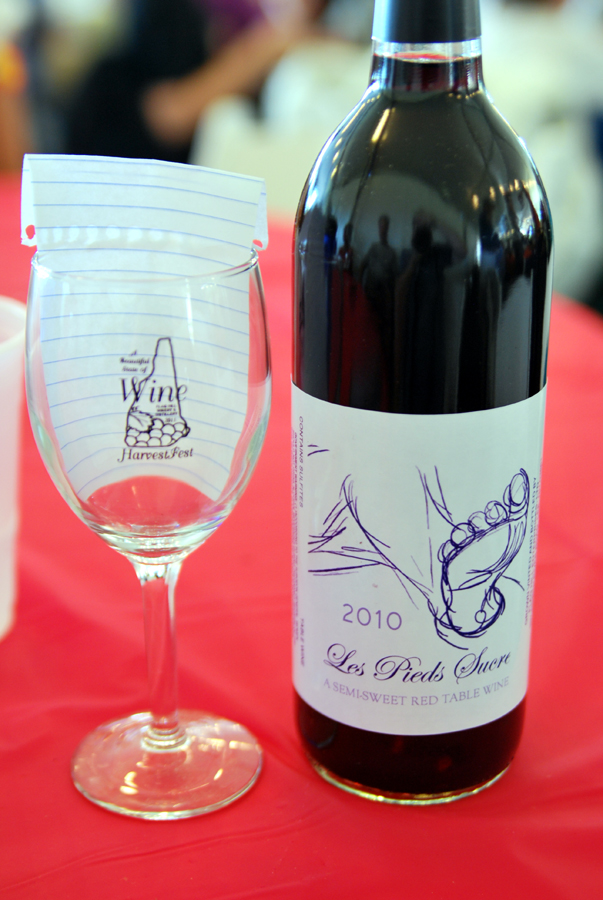
One of the interesting twists of the Harvest festival I was looking forward to was the release of the celebratory wine made from the 2010 harvest, named Les Pieds Sucre. The wine was made from a blend of Marechal Foch and Niagara. It is a slightly sweet red blend with a pleasant fruity nose from the Niagara grapes, and a healthy share of acidity and structure from the Foch. It was the perfect wine to toast the efforts of the group and to a great harvest for a beloved local winery.

At lunch I met the Lynch & Sell families scoping out Flag Hill, the site of the wedding of their children Sean & Megan next September 8th. Working the harvest was certainly a great length to go to learn something about the facility, but being able to try the food and wine afterwards clearly left them with a positive impression. I was flying solo this day so the lucky break for me to meet and enjoy lunch with them as they talked about their future plans was a true joy. Sean and Megan reminded me of Margot and I, oddly opposite though, and the big laugh was that Megan is “very specific”. There’s nothing wrong with that, really there isn’t!!! Best wishes to Sean & Meghan on their new life together and to both the Lynch and Sell families as they look forward to many happy years ahead.

( Tom, Donna & Sean Lynch with Megan, Karen and Garry Sell )

After lunch there were more activities including a grape stomp, yes with people’s feet, t-shirt painting and an up-close view of grapes being processed and pumped into the waiting tanks. The grape stomping created lots of laughs and there were plenty of folks who wanted to get purple and red feet painted on the back of their shirts to commemorate another exciting harvest.

( Stomp those grapes! )

As I watched the vineyard and winery staff scurry around tending to all the must being pumped out of the crusher I could only imagine how many more long days they still have ahead to get the harvest completed and the wines well on their way to the finished state. It’s times like these that I appreciate the work that I go through to make my own wines, but feel lucky that I’m just dealing with 6-10 gallons per batch!

This week is Regional Wine Week and I will be publishing articles on wines local to me all week. Tomorrow I will share my visit to Prospect Hill Winery in Lebanon Maine. Later in the week I will share tasting notes on wines from Vermont, Massachusetts and my home state of New Hampshire.

I urge everyone to get out an celebrate the wines of their region this week. You might be surprised to find more than you expected or something new and interesting to try.

Cheers!

Jason