Showing posts with label slow cooker. Show all posts

Friday, October 21, 2011

Red Wine Slow Cooked Pork Loin


The weather has fully turned to autumn and that means lots of slow cooker meals on those days I work from home. This week at the end of #winechat Marie (Life of Vines Blog & #winechat host) mentioned that the topic for next week’s chat will seasonal drinking and the shift to cooler weather. I’m not a seasonal drinker per se, but I do see the shift in action when I observe other people’s habits. In my post at CBS Boston earlier this year about Summer Beverage Trends I did share my thought on lighter beers and drinks with carbonation prevailing during the warm weather. I drink red wine and dark, heavy beers all year round, but the key for me is being able to serve red wine the right temperature, even in the heat. If you can’t, it isn’t worth wasting a good bottle of red wine served at 80 degrees!

I am a seasonal eater however, and the shift in recipes does involve cooking with red wine, something I did for the first time this season, this week. The meals are often heartier including root vegetables, reductions of the braising juices from the slow cooker and bread. Paired with an equally hearty red wine these meals are always quite satisfying.

This week I took a couple wines from Bonny Doon Vineyard for a spin, using one to cook three pounds of pork loin, and the other to pair with the finished product. I’ll review the wines first and then finish with the recipe for pork.
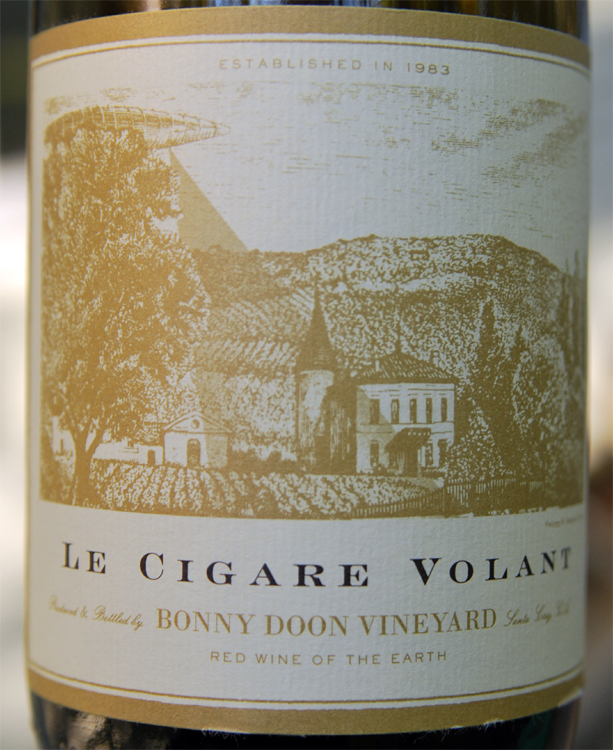
Le Cigare Volant 2007

Complex nose with lots of dark red and black fruits. Hints of warmth from the oak. Raspberry and plum in the mouth. There is also spice, earth and a vegetal character in the mouth. The complexity continues through the finish. Nice balance and it really demands to be enjoyed! I’ve heard plenty about this wine and was just too lazy up until recently to get some in house. This is a solid Rhone style blend from a California producer that I am just getting to know. A blend of 60% Grenache, 32% Syrah, 4% Mourvèdre and 4% Cinsault.

Clos de Gilroy 2010

Central Coast Grenache. I’m not sure about this particular wine. It is young and if it is going to develop any austerity and nuance I didn’t get a hint of it from my tasting. Sometimes bottles don’t travel well, and bottle #2 will be allowed to sit well into 2012 to see that happens. I found it to be fruity, light, with soft tannins and pretty basic. I did feel it was tasty enough and at a reasonable price point to cook with, and that’s just what I did.

Red Wine Slow Cooked Pork

Rub for the pork

½ cup brown sugar
1 tsp sweet paprika
1 tsp smoked paprika
1 tsp garlic powder
1 tsp freshly ground black pepper
1 Tbsp salt
½ tsp instant coffee powder
¼ tsp all spice
¼ tsp nutmeg
¼ tsp cinnamon
½ tsp chipotle powder
3 pound pork loin roast

Cooking liquid

1 cup Bonny Doon Clos de Gilroy 2010
1 Tbsp apple cider vinegar
1 Tbsp Reduced Sodium Worcestershire sauce
1 Tbsp honey

Mix all of the dry rub ingredients in a small bowl. Rub the pork loin, including the bottom
and sides of the roast with the prepared dry rub. Allow the meat to sit for at least an hour.

Setup your slow cooker, coat the inside of it with cooking spray and set on high. Heat a large skillet over medium-high heat and lightly coat with olive oil. Sear the roast on all sides until nicely browned. Remove from heat. Pour all of the cooking liquid ingredients into a small saucepan, and cook over medium heat until just hot.

Place the roast in the slow cooker. Pour the warm cooking liquid over top. Cook on high for 1 hour. Reduce heat and cook on low for 6 hours, or until it reaches the desired consistency.

Remove the pork from the slow cooker, and let rest, covered with tin foil, while you prepare the glaze form the leftover cooking liquid. Pour the liquid from the bottom of the slow cooker into a small pot on the stove, and bring to a boil. Let the liquid simmer and reduce for 10 minutes or so, until it thickens.


The pork came out of the slow cooker almost falling apart and by the time the plates were prepared a fork cut right through it. I plated the pork with sauteed onions, the sauce, mashed parsnip & potato and butter/dill carrots. The bread was a rosemary white bread made using a killer no-knead recipe taken from the book “My Bread, The Revolutionary No-Work, No-Knead Method”. The bread really is easy and the smell of warm rosemary while it was cooking was very pleasing!


The pairing with the Le Cigare Volant was spot on. The match for the spices in the rub and those in the wine was the central tie for me. The richness of the sauce over the pork was complimented by the complexity of the wine. The only sad part has been eating the leftovers at my desk at work without the wine!

Cheers!

Jason

Friday, March 11, 2011

Provencal Beef Stew

( That will get ya thinking! )

We didn’t have any beef dishes while we were in France so when I was home for a week or so and yearning for the aromas and flavors from the trip, I went searching for a good recipe. I found a whole bunch of different recipes for Provencal style beef stews and as I often do I picked different aspects from several to pull together something new.

Provencal Beef Stew over Steamed Vegetables

2 1/2 lbs of stew beef
1/3 cup flour
3/4 tsp salt
1/2 tsp black pepper
4 tsp olive oil
1 cup chopped onion
2 large cloves garlic, minced
1 cup dry red wine (Cotes du Rhone is perfect)
3 cups low-sodium beef broth
1 pound of diced tomatoes (frozen fresh from last summer), undrained
1 Tbsp. Herbes de Provence
1 lb potatoes, cut into ¾ inch cubes
4 large carrots, sliced
2 Tbsp corn starch
2 oz water
1/2 cup niçoise olives, pitted and cut in half
1/4 cup chopped fresh basil
1 large zucchini, cut into 1/2-inch thick slices
1 large yellow squash, cut into 1/2-inch thick slices
12 oz green beans, cleaned and trimmed

1. Combine flour, salt and pepper. Reserve 1 tablespoon flour mixture. Lightly coat beef with remaining flour mixture.

2. Heat 2 teaspoons oil in stockpot over medium heat until hot. Brown 1/2 of beef; remove from stockpot. Repeat with remaining 2 teaspoons oil and remaining beef. Place beef in a slow cooker that had been sprayed with cooking spray. Set the slow cooker on high.

3. Add onion and garlic to stockpot; cook and stir 3 to 5 minutes or until onions are tender. Add wine; increase heat to medium-high. Cook and stir 1 to 2 minutes or until browned bits attached to stockpot are dissolved. Pour this mixture into the slow cooker. Stir in broth, tomatoes, Herbes de Provence and remaining flour mixture. Add the potatoes and carrots. Cook on high for 1 hour, reduce heat to low and cook for 6 hours.

4. Mix the corn starch into the water. Add to the stew. Add the olives and basil and mix the stew well; cook on high for another 30 minutes until the olives are heated through and the stew has thickened.

6. Steam the green beans, zucchini and yellow squash until tender.

7. Serve the stew over the steamed vegetables with crusty bread and the remainder of the wine used to make the strew.

( Fair herbs, you will soon be making me happy! )

The aromas in the house while the slow cooker did its thing were amazing. The Herbes de Provence blend you might find in the store will vary in the ingredients, including savory, rosemary, thyme, basil and lavender. I often have all of these on hand and will definitely experiment with different combinations in future Provencal dishes.

The wine I selected to use in this dish and then enjoy with it was the La Vielle Ferme Cotes du Ventoux Rouge. As I noted in my post on the wines we enjoyed while in Provence (I had this wine on the Air France plane flight over), this wine has a wonderful nose and for the value price it is a great wine to have on hand.

( The final cut! It was so good. )

When paired with the stew and crusty bread the wine performed exceptionally. The influences of the garlic, onions and herbs flavored the beef wonderfully and the wine’s combination of fruit and earth added complexity to each bite. The steamed vegetables were cooked separately so with a bit of the stew sauce they retained a good deal of own flavors, which when paired with the wine was a lighter and fresher pairing.

Cheers!

Jason

Tuesday, January 11, 2011

Slow Cooked Venison with Butternut Squash & Parsnips


So I get this weird e-mail from a co-worker last week. “Want any venison?” He doesn’t hunt (that I knew of) so I wasn’t exactly sure whether there was a punch-line somewhere or it was a legitimate question. It turns out it was a valid question. A friend of his uses his house a base for hunting and had taken down a deer over the weekend. Payment for the friendly use of his place was some of the kill. I ended up with a three pound roast.

I’ve had venison several times before, but had never cooked it myself. Margot had seen a recipe for a Beef Tagine with Butternut Squash in a the Jan/Feb 2011issue of Cooking Light magazine (p. 80 or at the Cooking Light website). We had planned on making this recipe over the weekend with some local grass-fed beef. I used the recipe as a guide to develop a slow cooker meal around our newly acquired local venison roast.

Most of the slow cooker recipes I have made call for some amount of packaged stock (chicken or beef). I often use vegetable stock instead, but I felt like trying something different for this recipe. I also needed a bit more volume than the tagine recipe called for it to cook it all day. I used ½ of a bottle of Cote du Rhone wine, 1 cup of water and Vegemite. One of the recommended usages for Vegemite is to add flavor and salt to soups and stocks so I thought I might try it here.


Slow Cooked Venison with Butternut Squash & Parsnips
 1 3lb venison roast, trussed

Marinade
2 tsp paprika
1 tsp cinnamon
1 tsp salt
½ tsp ground ginger
½ tsp black pepper
½ tsp crushed red pepper
½ cup cider vinegar
½ cup red wine
5 garlic cloves, whole

Slow Cooker Preparation
4 Tbsp olive oil, divided
1 large onion, coarsely chopped
5 shallots, sliced
1 tsp paprika
½ tsp cinnamon
½ tsp ground ginger
¼ tsp crushed red pepper
½ bottle Cote du Rhone red wine
½ cup water
1 tsp Vegemite
24 oz fresh chopped tomatoes (mine were frozen from the summer) or 2 - 14 oz cans diced tomatoes
6 garlic cloves, chopped
3 bay leaves
1 large butternut squash, 1 inch cubes
4 large parsnips, ½ inch slices
Salt & pepper

Place the roast in a zip top bag. Combine the next 9 ingredients and mix well. Pour the mixture over the venison and close up the bag with as little air within it as possible. Shake the bag to distribute the marinade. Double bag the marinating roast and refrigerate it overnight.

Assemble your slow cooker and coat the insert with non-stick spray. Turn it on to high setting and cover. Remove the roast from the marinade, patting it dry. Discard the marinade. Heat 2 Tbsp of the oil in a large pan over medium heat. Apply salt and pepper to the roast. Brown the roast on all sides. Remove the roast and place it in the preheated slow cooker. Add the remaining oil to the pan used to brown the roast, increasing the heat to medium-high. Sauté the onions and shallots until just beginning to get brown. Add the paprika, cinnamon, ginger and crushed red pepper. Mix and allow to sauté for 2 minutes. Add the wine, water and Vegemite. Mix the vegemite in. Scrape all the savory bits from the bottom of the pan. Bring the mixture to a simmer. Add the tomatoes and garlic. Simmer for 5 minutes. A slight amount of thickening will occur. Remove it from the cook top.

Pour this mixture over the roast, add the bay leaves and place the cover on the slow cooker. Cook on high for 2 hours. Reduce the heat to low and cook for two more hours. After 4 hours of cooking, add the squash and parsnips, covering them in the hot cooking liquid. Add more wine or water if needed. Continue cooking for 4-5 more hours, until the meat has reached the desired consistency. We like ours to be soft and easily broken apart. Serve the meal in a bowl like a stew with crusty bread and red wine.

I let Margot dig in first. I love to gauge what I am in for from her reaction. She couldn’t stop saying how good it was. “Jay, seriously. This is really good.” I was busy pouring a glass of homemade Amarone to pair with the meal. I handed that to her and asked for a read on the pairing. Her immediate reaction was, “This works perfectly. The meat and vegetables are spicy and the wine complements that very well.” I sat down to dig in myself. Everything she had said was immediately confirmed. If somebody else served this to me and forgot to mention the type of meat, I would never have guessed venison. The wine is full bodied with a little sweetness and a bit of spice that stacked up well with the meat, sauce and vegetables.

The meat was soft and came apart with just a gentle action with a fork. Both the butternut and parsnips were soft but not falling apart. I did thicken (with cornstarch) some of the liquid from the slow cooker to pour over the meat and veggies. This choice really kicked up the flavors, something I would definitely recommend. There is indeed some spiciness from the crushed red pepper. If you have a low tolerance for heat I would recommend dropping the crushed red pepper from the second portion of the recipe.

I look forward to making this type of recipe again sometime. I am not a hunter, but the enjoyment of this meal made me think about how cool it would be to have my very own kill stored away in the freezer!

Cheers!

Jason

Saturday, November 13, 2010

Slow Cooker Pork & Ethos Merlot

( Hungry? )

A few years back Margot and I both used the Weight Watchers program to lose weight and get to a manageable food lifestyle. Writing a food and wine blog makes that hard, but we are much more capable of intertwining healthy eating now so we no longer actively count points. During that time Margot picked up the “In Good Time - 123 Slow Cooker Recipes To Come Home To” Weight Watchers recipe book. We’ve used it so many times it has pages falling out of it! The recipes are really that good and when I work from home on Wednesdays I have plenty of time to have something going in the slow cooker.

This week I picked a recipe we hadn’t yet tried for Braised Pork Loin with Port and Prunes which can be found on page 47 of the book. We pick our weekly menus on Sunday to aid in the grocery shopping, but this also gives me time to think about beverage pairings. As I thought about what to drink with the pork I remembered we had a bottle of Ethos Merlot that we brought back from Chateau Ste. Michelle in May. We tasted it during the wonderful private tasting we had and it knocked both of our socks off! This is the best Merlot I have ever had, and one of the best bottles of red wine I have ever had the privilege to taste. We’ll get back to the wine in a minute.

A few weeks back Margot took advantage of a buy-one-get-one deal on pork loin roasts. It ended up being for the big ones so we have adapted this recipe for a roast 1/3 larger than the recipe called for. We also used two homemade wines instead of port. For the sweet component we used a wine we made in 2007 that we called Dark Magic made from grocery store grapes. Early on it was very funky, but it has mellowed now and the residual sugar makes for a great taste. We added some depth with some 2010 Chilean Malbec. This is from an early bottled 3 gallons that ended up being a bonus from the batch. It is young and not refined yet, but it is very drinkable with distinctive flavors and aromas. The color is very dark and I thought the richness would be fantastic in this dish.

Braised Pork Loin with Port and Prunes

1 (4½ lb) boneless pork loin
2 tsp ground black pepper

1 ½ tsp salt
1 ½ tsp ground mustard
1 ½ tsp dried sage
¾ tsp dried thyme
2 Tbsp olive oil
2 ½ cups sliced onion
2 leeks, sliced thin (white part only)
2 carrots, peeled and sliced thin
½ cup dry red wine
1 cup sweet red wine
1 dry red wine
2/3 cup vegetable broth
20 pitted prunes
2 bay leaves
2 Tbsp cornstarch
2 Tbsp water

The process is pretty simple. The pepper, salt and spices are used to create a rub for the roast which should be cut in half crosswise. After applying the rub, heat the oil in a large pot. Once the oil is hot, brown the roast pieces on all sides. When browned move the roast to the slow cooker. I usually spray my slow cooker insert with some cooking spray to prevent sticking.

I added some additional oil to the pot used to brown the roast and then added the onion, leek and carrot, sautéing them for about 8 minutes. Add the wine and stock and scrape the bottom of the pot clean. Pour the wine and vegetable mixture over the pork in the slow cooker, add the prunes and bay leaves and cover. I cooked this on high for two hours and then low for another five hours. Make sure to remove the bay leaves before continuing.

( Ready to cook! )

When you are ready to serve it remove the pork to a heat-proof dish and keep warm. Transfer the contents of the slow cooker to a large pot and bring to a boil. Use the water and cornstarch to thicken the sauce. Salt and pepper to taste.

( This is what it looked like after I took it out of the cooker and it had sat in a warm oven for a few minutes. )

This dish was a jackpot. The pork was so tender that removing it from the slow cooker was a challenge. The combination of flavors was wonderful with the prunes and red wine providing a clear foundation of fruit and subtle sweetness. We served it alongside baked acorn squash that had been basted with olive oil and maple syrup. Incredible!

The wine didn’t fail us on our second taste. From the moment we smelled it we recalled our mutual agreement from the tasting. This bottle is from the 2005 vintage and my understanding is that it should be tough to find these days unless you are in Woodinville, WA! It has intense aromas of cherry and plum. You’d have to have the worst cold in the world not to be able catch the aromas. It is mouth-coating and silky, something I could sit and savor for far too long. The fruit flavors are what you notice first and there is slight gaminess to it that went really well with the pork. The wine is very balanced with noticeable tannins, but not in an overpowering way. The wine enhanced the perception of the spices and flavors in the food without losing itself. I don’t think I could easily have picked a better wine to pair with, although I am up for the challenge!

Cheers!

--Jason