Showing posts with label local. Show all posts

Wednesday, April 10, 2013

More From The Orchard

( Apple blossoms right down the street from me in the Spring. )

Yesterday I offered up a bit of a primer on cider. A little bit of historical context, characteristics & regional variations, how it's made and producers you should know. It was a lot of information but I hadn't covered all the topics that I wanted to. Today I'm back with reviews of recent tastings, some tips on pairing cider with food and a little bit about my own experience making cider at home.

Cider Reviews

I try new ciders whenever and wherever I find them. I developed a taste for cider growing up in New England. Occasionally the fresh pressed cider from a local farm had gone a little hard and while I don't think I knew about the potential alcohol in it, I did like the tartness and minor carbonation. I never got to drink much of it, it was usually spirited away upon detection that it had gone "hard", but I enjoyed it nonetheless. When I did begin to drink alcohol, legally of course, I consumed cider frequently. For me it was a much better alternative to light beer when I had the funds to buy just for myself.

Samuel Smith Organic Hard Cider

Samuel Smith Organic Hard Cider is medium dry with plenty of sweet & tart apple to go around this is a very enjoyable cider. There is a floral element to this that you will also see mentioned in quite a number of other reviews. Knowing what apple blossoms smell like, I have orchards on my street, I do agree that is what the aroma is most like. At 5% ABV this cider won't do a lot of damage in moderation. To me this is a classic commercial version of English cider.


Angry Orchard Ciders

The ciders from Angry Orchard are relatively new and until recently I hadn't tried all the varieties available in 12oz bottles.  I haven't yet tried Ice Man or Straw Man from the Cider House Collection. Both the Crisp and Traditional ciders are straightforward with the Traditional being the drier, sharper and more tart of the two. The Crisp tasted too juicy and fruity to me, but it isn't a bad cider to sit back and enjoy. The Ginger version is more interesting still, but I found the ginger flavor to be somewhat hidden by the apple aromas and sweetness. I found the Elderflower to have a skunky nose and it just wasn't a combination that I enjoyed well enough to want to drink it again.

Sarasola Basque Cider

Pours hazy and with an orange tint. The aromas are tart and sour which follows through in the mouth. The cider is funky, earthy, acetic, sour and much more interesting that I expected. The apple aromas and flavors are there but are very much masked by the Brett and sour elements. This reminds me of some of the sour Belgian ales and lambics I have had. The reviews at several of the craft beer sites for this cider were decidedly not positive. It left me wondering if the reviewers didn't know that Basque cider isn't like American cider.

Woodchuck Ginger

I've been drinking Woodchuck ciders for as long as I can remember them being available (1991) but I had never had the ginger which has only been out less than a year. This is the best ginger flavor I have had in a cider, and something I hope to replicate in a cider of my own in the next season. The cider itself is dry so the ginger stands out with a potent spicy character and apples as the backdrop.

Bantam Wunderkind

Bantam Cider Wunderkind is the best new cider I have had in some time. It pours pale straw in color and crystal clear. The tart apple and floral notes in the nose drew me in. Flavor wise this cider offers a spectrum and tart and sweet apple flavors and hints of ginger.  I would highly recommend this to anyone who can find it in or around Massachusetts where it is made.


Etienne Dupont Organic Cidre Bouché Brut de Normandie 2009

Ciders made in Normandy, like Etienne Dupont, are a real treat. In the traditional style there are unfiltered, barrel aged (fermented in part with native yeasts and sometimes Brett) and massively carbonated. This one was no slouch on any of those points. It poured and orange gold color and threw up apples, yeast funk and barnyard right away. In the mouth the cider apples reign and hints of spices come and go. There is some residual sweetness but it is kept in check by the acidity and carbonation. I bought a small bottle of this particular producer and now I know to buy the big one the next time.

Links to Older Reviews

Crispin Cider (Review #1, Review #2, Review #3)

Pairing Cider with Food

Food & beverage pairing has become somewhat of a sport in the United State media, and I’m not sure that has been entirely beneficial. Matching food & beverages has an immense amount of subjective quality to it, and while most of the basic rules are valid, the focus on “perfect pairings” is driving people nuts.

Cider is an old beverage, a rustic beverage, and thus consumers of it anywhere there is a healthy cider-making tradition have tried it with absolutely every food-stuff available. This means there should be lots of experience pairing cider but it also serves to stoke the fires of subjective judgments of which regional foods & ciders go together best. We've lost a lot of the cider tradition in the US so our experience with it on the table isn't as tangible as it could be. It's coming back though. Let’s take a look at some of the basic rules in terms of cider & food pairing. No matter whether you are new to cider or not some of these suggestions will open up exciting possibilities for you to try.

( Up close with some apple blossoms. The smell is so wonderful! )

Dry, highly carbonated ciders can be paired much like Champagne and sparkling wine. The most significant difference is that the aromas and flavors are more focused around apples, but in versions that have balanced flavors it shouldn't cause pairing problems. So this means pairings with lots of different appetizers, especially fried ones, tapas, oysters and shellfish.

Cheese is the ultimate pairing tool for me, but I am a sucker for cheese! Cheddar, especially aged types, pairs well with cider. Dubliner, an Irish import, is particularly nice with both dry and medium dry ciders. Goat cheese pairs nicely as well, and even better with added fruit or a chutney. Funky cheeses can pair well with cider, and if you match some funk with funk (French & Spanish ciders) you might make magic! Blue cheese is a good match for sweeter ciders.

Poultry and cider can be paired very well, and I've often found cider to be the best match for something like Thanksgiving dinner and the convergence of all those textures and flavors. Roasted chicken with herbs and a medium dry to dry cider is a combination that I've enjoyed many times.

Desserts and any sweet treats containing apple can be paired with cider, and the basic rule of matching sweet with sweet does apply. Fresh baked apple pie with a glass of ice cider is a combination sure to please!

Making Cider At Home

Making cider at home is a straightforward act. I recently wrote a post about "scrumpy" and I presented a countertop version of it that only takes a couple weeks to ferment and is consumed before the fermentation is complete and without any fining or filtering. Check out Adventures in Fermentation - Scrumpy to see how it's done.

Cider-making at home can be much more elaborate, and if you ask my wife she'll tell you I've gone there and will likely go even bigger the next time. I made my first hard cider in 2005. I have access to fresh pressed cider from several local farms so getting the ingredients has never been a problem.  I've made hard cider from varietal juice, Mutsu in particular, as well as the "house blends" from five area farms. The only consideration about the starting product that I have made up to this point is that it can only be UV treated, but NOT pasteurized. Living sweet cider makes the best hard cider. The results have spanned a broad range, from really tart, sour & dry to gently sweet with a beautiful nose of apples and apple blossoms. Duplicating the best outcomes has been hard because each new season of apples is different.

In 2009 I embarked on a big cider project. I was interested in making several different styles of cider from the same source. I started with 35 gallons of fresh cider. I used different yeasts and finished some of the ciders with homemade fruit syrups. All of the cider I made for this project was still. I had lost a fair bit of cider in 2007 to overcharged bottles and I was loathe to see that happen again.

( The seven carboys around the outer ring are from the 2009 project. )

The outcome was very educational. The unflavored cider made with the traditional cider yeast was good, but the least interesting. The ciders made with a Sweet Mead yeast were naturally a bit sweeter and had a more complex nose. The ciders made with cherry, strawberry and raspberry fruit syrups ranged in sweetness with the raspberry one tasting like raspberry/apple candy. The best outcome was the unflavored cider fermented with Rudesheimer yeast which is actually a yeast used to make German Riesling wines. The complexity of the cider was beyond all of my wildest imagination. I named it "Rudy" and coveted each bottle that I pulled from the cellar to enjoy. That cider went on to win a first place at a regional homebrew competition and the feedback from everyone who tried it was overwhelming. If there is ever a cider I would like to recreate, it would be this one.

( Open apple blossoms. They are nice, but boy do they create a lot of pollen in the neighborhood! )

With the exception of pressing the fruit myself everything else about cider-making at home has been the same as it would be for a commercial producer, albeit on a smaller scale. In 2013 I do plan to make a larger volume than I have made in the past. I plan to blend ciders from multiple sources, use several different yeasts and even barrel age some. I've also considered using cryo-extraction to create the base for an ice cider, but that has to wait until winter comes again in New Hampshire, something I am not thinking about at all right now! I will likely get the chance to crush and press my own apples this year too. One of my brew club friends has access to lots of fruit from a family orchard and with a little bit of elbow grease I hope to bring home my hand pressed cider and make something delicious with it.

Onward to #ciderchat!

Once again there is a lot of information here. To me cider is really exciting and sharing all of this information was an exciting task. I look forward to answering questions and sharing experiences during #winechat tonight.

So what I am going to be drinking tonight during the cider conversation #winechat? I have some homemade scrumpy that I will start off with then I am going to open a bottle from the Dooryard series made by Farnum Hill and maybe a bottle of Newtown Pippin from Original Sin Ciders.

Cheers!

Jason

Friday, April 5, 2013

My Half Full Glass - April 4th, 2013


Chateau Le Bonnat 2010 Graves Blanc

I can't say that I am a fan of White Bordeaux because I've have never really had that many. But when I have had them I have typically enjoyed the experience which begs the question of why I don't seek more of them out. Who knows, life is just like that I guess!

I came by this particular selection, Chateau Le Bonnat 2010 Graves Blanc, in a Bordeaux combo pack from Lot 18 and if I recall the price per bottle was just shy of $17, which is about the current average price for the label according to sites that track price trends.

I opened the bottle for no particular reason or occasion and I don't even remember now what I had for dinner with it. Clearly getting off track with the blogging has created some undesirable outcomes!

The wine is a blend of 66 percent Sémillon and 34 percent Sauvignon Blanc, with 6 months of oak aging. I found conflicting information on whether just the Sémillon was aged or the blend. I am guessing just the Sémillon. I was met with white flowers (or maybe citrus blossoms), herbs and a bit of stone in the nose. There was also a touch of nuttiness as well. The flavors were predominantly unripe peach with a dose of tart citrus that picks up in the middle through the finish. The wine has a creamy texture with a bit of body on the palate, but does remain crisp with a clean finish and a touch of acid in the exit.

I would recommend this wine as a worthy example of Graves Blanc  and a decent value. If you are looking for a versatile white and can find it for under $17, go for it!

Smuttynose Gravitation

I had the most recent release of this beer on tap over dinner with my wife at Cask & Vine (a place I will share more about soon) in Derry, NH.

Gravitation is part of the Big Beer series from Smuttynose Brewing located in New Hampshire. At 12% ABV the word big is apt. Categorically this beer is designated as a Belgian Quad and this particular beer is made with a range of specialty malts and raisin syrup to create its unique character.

The beer is a light brown color and smells/tastes of dried fruits (raisins, prunes), unrefined/raw sugars and malts.  The alcohol is not entirely balanced and easily perceptible. The beer goes down smoothly enough making it insanely dangerous. It is sweet, but there is a crispness or sharp edge to it that keeps it from coming across as cloying.

As I was researching this beer I reviewed the comments on it at Beer Advocate. Clearly the reviews are mixed and not having much experience with the style I can't really confirm or refute any of it on a technical basis. I did enjoy it, and so did Margot, so when consumed socially rather than with my reviewer hat on, I humbly suggest that this beer is hugely enjoyable.

Cheers!

Jason

Friday, March 22, 2013

My Half Full Glass - March 21st, 2013


After a month-long break I am trying to get back on terms with my weekly posts. Some things have calmed down and others stay as insane as they were when they knocked me off track. Such is life!
This week is a celebration of drinking local with both a locally made spirit and a local mead. Do you drink local?

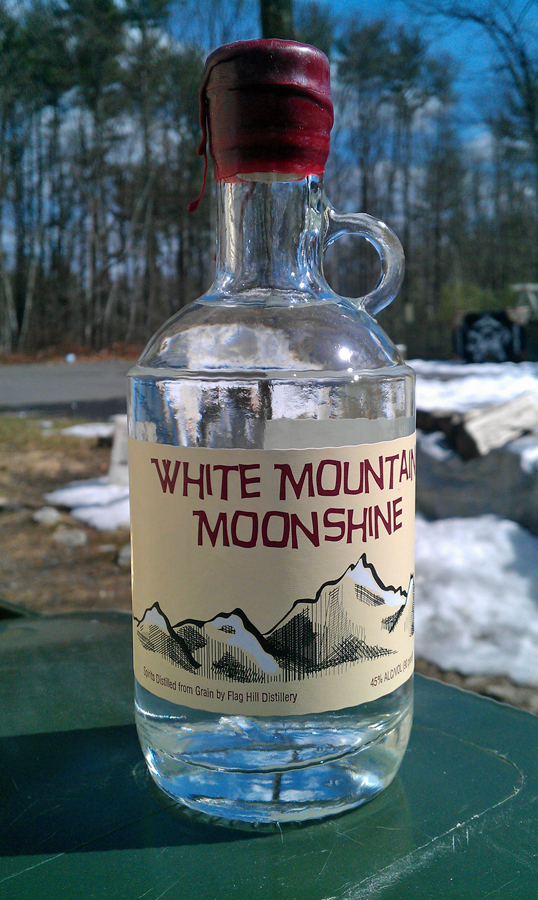
Flag Hill Distillery White Mountain Moonshine

I took my first sip of the Flag Hill White Mountain Moonshine whilst outside brewing a pot of beer on a sunny yet cold & windy day. I am sure the environment had something to do with my first impressions, but since they were quite positive I think the setup only ads to be mystique of drinking local moonshine!

I don't have a lot of experience with white/un-aged spirits so I don't really know how to describe them very well. The nose definitely has a punch of alcohol and reminded me of high proof vodka. The more I thought about it the more I realized that there is a greenness to the nose which I can only link to the corn and  gently malted barley being un-hidden by barrel aging. The nose is slightly sweet, but not abundantly so.

In the mouth this drink is sweet, and at 90 proof it does warm quickly, but there is not the harshness or burn that you do find in undiluted 'shine or white dog that you might get served out of an unlabelled container.  Some of amount of grain flavor was accessible to me, but I again don't feel qualified to say much more about it.

Because I was around the brewpot I thought of other communal functions where this tipple, and the cute little 375 ml handle bottle is just really cool, might fit in well. Campfires and cigar night with the boys both came to mind.

I purchased this at my local NH Liquor Store at $18.99 for the 375ml bottle. Yes that is a bit pricey, but I know, like and appreciate what the folks at Flag Hill do so it was worth it to me.

Sap House Meadery Vanilla Metheglin

I got some cheerful personal mead-making news this week in the form of a silver medal at the 2013 Mazer Cup for my vanilla mead. Realizing I hadn't sampled but one commercial version, from Moonlight Meadery (review from 2011), I sought out one made from Sap House Meadery in Center Ossipee here in New Hampshire.

Vanilla is a really wonderful spice but I don't think most people really ever experience it fully and completely. Imitation vanilla is not vanilla. The fake aromas and flavors don't do it justice. You need vanilla beans, and good ones from Madagascar or India to really understand what vanilla smells and tastes like. When you then go the next step and steep the beans in a mead (with sufficient alcohol of course) you end up making a slightly less pungent version of vanilla extract, but one you can drink! Only then can you really appreciate vanilla as it really is.

Because vanilla beans are the seed pod of the Vanilla Orchid, real vanilla will exude floral essences and anyone who loves to explore the world with their nose should spend some time with a good vanilla bean; it is heavenly.

The Sap House Meadery Vanilla Bean Mead is a local wildflower honey mead flavored with Indian Vanilla beans. The nose is very floral, both from the honey and the vanilla, and definitely inviting. The finish is sweet, but really medium-sweet like a natural cream soda versus a syrupy uber-commercialized version.

Both the honey and vanilla are accessible in the mouth and the tartness that builds from mid-sip and fades through the finish helps define the flavors nicely. Whether you drink this on its own or use it to add vanilla to a cocktail it tastes very real and classy.

Nicely done Sap House Meadery!

Cheers!

Jason

Wednesday, January 23, 2013

Session-able Beers


After I selected a couple beers to enjoy while I was working on bottling several batches of wine, mead and beer it occurred to me that part of my selection criteria might make for an interesting blog post.

Two of the bottles I picked out were filled with the Ancient Fire 2012 Mild English Ale. This beer was my first attempt at this style, a Mild and in sub-category 11A of the BJCP style guidelines for those familiar with the BJCP program, a style that when made correctly should have an ABV of 2.8% to 4.5%. Mine came in somewhere between 3.75% and 4% when it was finished. That alcohol content potentially qualifies it as a session beer, a term that is warmly debated in some circles, although before I claim victory for that designation to be applied to my beer let's explore what a session beer actually should be more broadly.

I like the definition of a session beer from the folks over at the Session Beer Project.  It is packaged neatly as a set of bullets and covers both objective AND subjective concerns about a beer you might find in your glass. They say that a session beer should be:
  • 4.5% alcohol by volume or less
  • flavorful enough to be interesting
  • balanced enough for multiple pints
  • conducive to conversation
  • reasonably priced
I've got the first bullet covered with my Mild. The next three are subjective and all I can say is that my English Mild is somewhat interesting, easily quaffable by the pint or three and has in fact inspired conversation amongst several kinds of people including some in my brew club as well as others that are typically light American beer drinkers. The last bullet applies only in that I made the beer myself and it does turn out to be pretty cheap in the homemade, small-batch context. Would others call it a session beer? Maybe. I do.

Where did the term session beer originate?

The term originated in Britain and was quite literal, meaning a beer that could be drunk in sizable quantity during a session, e.g. a social event, workday break, etc., without the onset of intoxication. The honest origin is that alcohol was taxed so creating lower alcohol, but flavorful and drinkable, beers was more advantageous for brewers. Many of the contemporary British beers commonly associated with this definition do in fact contain alcohol of less than 4% ABV, although such beers are harder to find being made in the US. Historically even the premium ales (the next step up in British beer parlance) would have likely topped out around 4% ABV, but would have been considered too strong for a session beer. The Fullers line of pub beers, including the Chiswick Bitter (3.5%) , London Pride (4.1%) and ESB (5.5%) are a close approximation of the classic session, premium and strong tiered British beer scale.

Why did I select my Mild for my "work" beer? Well, mostly because of the lower alcohol content, but also because the flavors are mild and won't wreck my palate so that I can't properly taste the products I am bottling. At bottling time a solid taste is the last line of defense in making sure what goes in the bottle is as good as it can be. A last minute adjustment, sugar or acid perhaps, might be called for based on how the product smells and tastes. And a beer that won't overpower my senses, and who really wants to drink water while they do this work anyway, is a solid fit here.

When you are out and about what beers might you find that would fit all five of the bullets above, making it a true session beer?

You may find the Fuller's beers at some bars, including the British Beer Company, but both the bottled and kegged versions for import to the US are generally above the 4-4.5% ABV mark. Guinness on draft is typically about 4.3% ABV, but I personally don't find it interesting enough for a "true" session beer.

The beers from Notch brewing, brewed in several locations in New England, range from 2.8% to 4.5% ABV for the bottled versions and in the high 3's for their cask series. I've had the Notch Session Ale (4.5%) before and do think it is an interesting beer, although it is right at the cutoff for the alcohol content.

There are others session-able beers out there and at beer bars and brew pubs that serve cask ales you might actually find more than one version to try at any one time. Check the beer menu at any new bar you visit, most will have the ABV noted making it easy to find something session-able if desired.

Cheers!

Jason


Session Beer References 

Friday, January 4, 2013

My Half Full Glass - January 3rd, 2013


White Birch Tavern Ale

For those not familiar with White Birch Brewing, they are a nano-brewery based in Hooksett, NH. They are also one of a few local breweries that resonate with my tastes, and in the case of the Tavern Ale, my wife's tastes as well.

Margot and I were on hand when Tavern Ale was first debuted, and the story that went with it, which can be found at the WB Tavern Ale page, is interesting; connecting the beer to the history of tavern's in New Hampshire.

I am not in general a fan of smoky beers, I find the overt smokiness in many of them to be too much for me. The Tavern Ale presents a more subtle and restrained smokiness, one that doesn't keep building as you continue to drink the beer. With the addition of rich malty accents, hoppy notes and a pronounced chocolate flavor, this beer comes off very balanced and smooth. Margot and I killed two growlers of this BEFORE Christmas!

Bellwether No. 4 Cider

Nose is subtly of tart, cider apples. Slightly sweet with a funky apple flavor that comes in mid-way and lingers through the finish. Very polished and clean. This cider is made with Northern Spy apples and if you know that apple variety you will pick up the flavors straight away. An example of a mellow, understated cider. This is not the best from Bellwether (Trumansburg, NY) that I've had, and if you've never enjoyed their ciders I recommend a visit! When I last tasted at Bellwether I most enjoyed the Cherry Street and King Baldwin. I know I took the Cherry Street cider to a bachelor party in the fall, but no tasting notes survived the night!

One more note. This cider is a perfect stand-in for sparkling wine for a drinker who isn't a wine person. It has the sparkle needed, but presents all-together different flavors and might appeal to beer drinkers that you might be hosting.

Cheers!

Jason

Wednesday, October 3, 2012

Mead for Dummies

( Drink more mead! )

Well not exactly. Mead for newbies maybe. A catchy title is worth a many more words so when you find one, use it!

Mead is a beverage made from fermented honey, and is also often referred to as honey-wine. Traditional mead is very straightforward in concept, it is made with honey, water and yeast. It can't be that simple, can it? Yes, but that is very much just the beginning. But let's start at the real beginning by jumping in the way back machine!

Mead is old beverage. Recent archaeometric evidence, check out the book Uncorking the Past, from the Jiahu region of China suggests that fermented beverages that included honey, rice and hawthorn fruit were produced there about 7000 years ago during the Neolithic era. The chemical analysis undertaken to provide this evidence is based on identifying chemical signatures of residues found in pottery. While not an exact science, ongoing analysis suggests that in addition to the ingredients listed above, other fruits like native grapes, Asiatic cherries or flowers from the geranium family may have also been included in these very old beverages. 

The best explanation of how early humans may have stumbled upon the knowledge that honey would ferment (a process they didn't understand early on, but had enough experience to harness) into a pleasurable beverages goes a little something like this:

A hunter gatherer type happens upon a beehive that had fallen from a tree. The top of the hive was open and there had been rain since it dropped. There was a pool of liquid filling the hive. The liquid smelled sweet so the curious human stuck his/her hand in it and tasted it. Bam, it was sweet and delicious so he drank all he/she could extract! A little while later the imbiber felt a bit funny and maybe a little light on their feet. This was a light bulb moment. Find beehives laden with honey, fill them with water and let them sit exposed to the air for some time and it was assumed that this tasty, and intoxicating beverage, would result. The rest is indeed history!

Speeding through history there is evidence from Greece, India, Scotland, England, the Baltic countries, Russia, Finland, Ehtiopia and many other locales that mead (or beverages fermented with honey) were part of the local foodstuffs and are still important local products. Mead is seeing renewed interest in America, something akin to how craft beer took beer-making back to its roots and has now achieved cult status for many.

So what else do you need to know about mead? Mead comes in a variety of styles. The most common (and popular) are listed below.
  • Traditional – water, honey and yeast. That’s it. People interested in mead should try this style to get a baseline for what wine made from honey tastes like. All of the rest of the variations below are riffs on this, using the honey, water and yeast as the starting point.
  • Metheglin – contains spices. I made an Orange/Vanilla mead this year that is technically a metheglin. The orange was low volume and the vanilla is a predominant flavor in the finished product. Other spices like cinnamon, clove, nutmeg, tea and ginger are all commonly used. My first mead was a Blackberry with nutmeg so either a metheglin or melomel (up next).
  • Melomel – made with fruit. Next to traditional mead this is the second most popular type in my experience. Berries, cherries, currant, mango, etc. These can come dry or sweet depending on the maker’s preference. If made with apples and grapes, see below.
  • Pyment – made with grapes or grape juice. I've only had a few of these, one just last night in fact that was rockstar, and this is an area I will experiment with in the coming years. If oak aged it can have a port-like character.
  • Braggot – made with hops and/or malt. Another variation I've only had a couple of times, but has intense character. The best one I've had came from Michael at Moonlight Meadery (we’re getting to he and his meads!) and was in an Imperial Stout form. Another area for potential experimentation for me.
  • Cyser – made with apples or cider. I am making one of these next weekend, with some cinnamon. Sort of baked apples perhaps.
Mead can be both dry and sweet and this choice is more of a stylistic one than anything inherent in the different styles. You will also find meads that are still, pettilant (very gently sparkling) and those that are full on carbonated. This is again a choice of style, and both choices coupled with the different styles really allow a meadmaker to create unique beverages for different tastes. Additional character can be added to mead through barrel aging, and the results can depend on both what the barrel had been used for previously and the composition of the mead being aged.

Drink more mead!

For me personally mead-making is of particular interest right now. I shared a bit my personal history with mead-making in a recent blog post entitled Sweet Dreams. In that same post I shared the story of making a commercial version of a recipe of my own with the folks at Moonlight Meadery in Londonderry, NH. That new product hasn't yet reached the bottle so I can't tell you anything more about it just yet.

I definitely can share (and have many times in my blog) more about Moonlight Meadery though, and in fact they will be tell all the #winechat participants about themselves and their products tonight (October 3rd) at 9PM EST.

Moonlight Meadery makes a dizzying array of meads covering all of the styles above, except braggot (which they can't make it legally, bah!) and pyment, something they have yet to make, but I have it on good authority that we should expect one in the coming months!

There is a Moonlight mead for everyone. Folks that want to go traditional will dig Sensual. Desire is flavored with a blend of blueberries, black cherries and blackcurrants and is the flagship product from Moonlight. If you are a bit more daring you might try Fury, flavored with a blend of chili peppers. If heat isn't your style then maybe Sumptuous, flavored with mango, might hit your sweet spot. Kurt's Apple Pie never fails to please and when Fall comes to New England then blend of apples, honey, vanilla and brown spices fit right in. Maybe Flirt (apricot), Tease (plum) or Fling (strawberry/rhubarb) would work best for you. All I know is that you WILL find something you like!

( Michael Fairbrother spends lots of time at the tasting bar educating guests about mead. )

The following comes directly from the Moonlight Meadery web site.

It all started back in 1995, when Michael tried a cyser (apple and honey mead) for the first time.  Since that first sip Michael has developed a passion, and a masterful skill at making international award winning meads. Michael Fairbrother has started Moonlight Meadery®, with a mission to bring ultra premium meads to the market place.  It is more than a product and it is more than a process, it's our obsession.

    "Mead to me is passion, it's about living and love, it's about enjoyment, family and friends, and sharing." says Michael Fairbrother, Founder and Mead Maker. 

Our meads will be unique, and unlike anything you have ever tried, you will find it incredible!   We are going to embrace the unique nature of natural honey as minimally processed as possible.

All of that is true, and I know this because I have heard it from the people involved directly. But those words don't really do the product justice, nor do they make the authenticity and sincerity of the Michael and his team at Moonlight real, something everyone visit to experience. When you meet people who are passionate and truly love the work they do you can't mistake it for anything else.

I've written about the meads from Moonlight on several occasions since walking through their door for the first time in 2010, hell I've been inspired by their range of products to make a few crazy meads of my own!
My meadmaking bender started in 2011 with my Orange/Vanilla mead. When that little dandy took medals twice in competition I realized I might be on to something. The follow-on projects were a bit less successful, Cherry/Black Currant, Blueberry and Pecan Pie (yes, it tastes weird) and only because I was still learning how much additional flavor I really needed to add to the honey to get a balanced, yet forward result. None of those meads are bad, they are just really light in flavor and didn't meet my expectations.

My cyser using local apple cider, Vermont honey and cinnamon moved me in the direction I was looking for, but still left plenty of room for improvement. I then made a hoppy braggot (riffing on the recipe for a West Coast IPA named Pliny the Elder) that drinks like a dream and needs it own security, finally stepping back to review what I learned and collect my thoughts on where to go next. I consulted the mead-making bible, the Compleat Meadermaker by Ken Schramm, quite a bit during my reflection and just let the ideas flow.

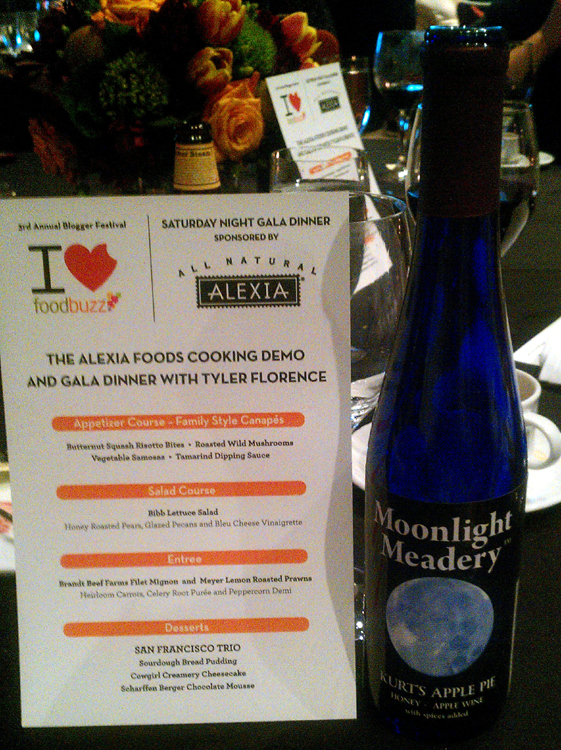
In June my wife and I attended the fifth annual WineMaker Magazine Conference where the yearly competition awards are announced. We also took some Moonlight mead with us to share, something I have been doing for conference trips, including the 2011 Foodbuzz Festival shown on the left. We took home several medals for our meads & wines which of course made us happy. Much to our delight the winner of Wine Maker of the Year was a meadmaker, Godwin Meniru who has his own meadery opening soon, http://www.menirumeadery.com/, from Ohio who makes some pretty mean stuff! We were lucky enough to taste his meads during the trip and I can't wait to see where his exploits take him.

I really cranked up the creative energy since coming home from the conference. To start I made a traditional sweet mead from Vermont honey that is sure to please anyone who gets a taste. The second batch of Orange/Vanilla mead is waiting to be bottled and meads flavored with cinnamon, hot peppers, dandelion & tea, strawberry, hops, sage & lemon and ginger are at various points in the process. I have some unflavored mead that is finished and waiting for infusions of flavor, and boy do I have plans. Tea, other fruits, spices and herbs are all in the line of fire. Like I said, I'm a really amped up to create new and interesting beverages, all in a quest to see what is possible.

Wow, that's a lot of information! I hope you caught all of that and will come back to follow the links to learn more about mead and people who enjoy making it. Tune into for #winechat on Twitter tonight (10/3/2012) to learn more about mead and Moonlight Meadery.

Cheers!

Jason

Friday, September 21, 2012

In Uncertain Terms

( Local grape harvest in Lee, NH. )

Wine lovers have their own religion and their own politics. After getting a bit of a handle on the many differences within the community I have found that it all makes as much coherent sense as so many other things in our society, e.g. not much. A great many different perspectives based on diverse experiences are brought to bear, and the veracity of personal opinions turn preferences into crusades for supposed authenticity.

One of the points of contention between different groups of the faithful is the "localness" of the wine. Simply stated we are talking about the hierarchy of "locally grown" above "locally made". I'll also add to this the sense of place that surrounds the locations where "great" wines are grown and why that makes them more special than wines made combining multiple and "lesser" sources either local to the winery or much farther afield. Is this really true? Better for who? There is plenty of historical precedent for places and rules, and I am not suggesting at all that their shouldn't ever be any rules; but what exactly makes sense in the New World when the goal we all shouldn't lose sight of is fostering business and making money flow so people have jobs? We aren't the old places and not everyone wants to be them, so why are we trying?.

There is a glut of murky terminology used by some actors to try to distinguish themselves in this and other regards in the wine world. Words like real and honest are hard to clarify in the context that folks try to apply them. What is the opposite called and what is the specific difference? Unreal and dis-honest don't make sense. How is a wine made from grapes from out of the area not real or not honest, especially if the source is disclosed by the winemaker? Why should they not be allowed to do this if it makes business sense for them? Don't we want the market to mete out what of those types of choices work in the long run?

The 800lb gorilla (which Tom Wark nailed this week) goes like, "so all respectable craft should be 100% local?" and this question is still out there. I say no just on the principle that our societal evolution to a global network requires some accommodation for the new and different. Do we hold beer, all food, art, music, furniture (again Tom nailed this), etc, etc, to the same standard? If yes, ok; let's just say that such people are a mighty specific group and if this is how you roll, by all means go for it. If the answer is no, then why do we hold wine to such a standard?

What are the goals? That depends. At first glance you have a consumer perspective and a producer perspective. Sales trends suggest that while the majority of wine drinkers still don't choose to know what they drink much better than it takes to acquire it. Trends in craft beer, small production wine and micro-distillation do support the assertion of an up-tick in interest for wines that are produced on a smaller scale by someone with a specific principles and a passionate story driving them to make the stuff. The consumer is then two groups, one containing the average consumers and another containing something else, a super-consumer if you will.To the super-consumer people, places, specifics and philosophies do matter, but only because they choose for them to.

To me this is really a matter of taste, and I consider one of Terry Thiese's philosophies as a good guide. Don't look or talk down to people who have tastes such that they don't really appreciate wines that are universally considered fine (or meet your standards, whatever they may be), but in return don't allow them to suggest just because they have different tastes that your own refined tastes should be reviled as pretentious bullshit. Walk on the other side of the street if you want, but calling them out and suggesting that their lacking (your opinion) and the products they like shouldn't be allowed is just poor form. If you want your wine more or less local, have at it! Mine isn't better for me than yours is for you, and vice versa. Whether we recognize the fineness or localness in the product doesn't say anything good or bad about it or ourselves.Can't we all just get along?

Producers have a range of motivations, but for so many that I have asked these questions of they say they WANT to do as much as they can themselves and/or locally, but they are also trying to run a business and having options always make that process less stressful. There is plenty of theology thrown around when you get a group of producers talking about this topic, but in places where they are used to collaborating and working well together, you'll be sure to see more than one ranking opinion! If they don't agree on a "right" way, what are consumers doing pushing a more specific agenda?

Assuming anyone reads this I expect the flames to be duly fanned. I support a range of choices and drink what I like after I have experienced it in a way that fits my needs. I don't tell other people what they should or shouldn't drink and I definitely do not tell producers how to run THEIR businesses. But that doesn't mean I won't ask questions and won't make recommendations that all together are designed to increase the transparency of how products are made so producers can make what works for them AND consumers can choose the products that fit their politics the best. How do you do wine?

Cheers!

Jason

Sunday, July 15, 2012

Mead Free or Die – The Path to Here


( The precursor to Cherry/Currant mead. You'll get it farther down. )

In late 2010 I went to the Moonlight Meadery Open House at their current (new then, thus the OH) location and tasted an impressive lineup of meads. I posted the visit in a Local Sips column, and based on the positive experience and plans for new connections I described in the post (BFD, brewing, mead-making and getting to know Michael Fairbrother are my fun times!) it was clear then that my visit left an impression.


In the year and a half since that posting Moonlight Meadery has seen an explosion of growth and fans, a Moonlight Nation if you will. The Nation is really a nation too. The Moonlight team have been on the road to conferences, publicity stops and breweries/meaderies all over this country. I’ve also written about them a few times, a festival tasting, a visit and a tribute toKurt’s Apple Pie. The great lineup of quality products coupled with active participation in clubs and events at both the regional and national level has garnered Michael, Bernice and the whole crew at Moonlight very lots of well-deserved attention.

I was also inspired to make mead again from that visit. I made a blackberry spiced one in 2006 or 2007 which I vaguely recall; but nothing really stuck from the experience. I have since made eight different styles to gain more experience, including the very popular Orange/Vanilla, Cherry/Currant, Cinnamon Cyser, Blueberry Hydromel, Pecan Pie and Hopped Braggot; all of which have gone to the bottle and taste like decent first attempts. I’ve also got batches of Dandelion/Oolong/Meyer Lemon and a plain sack-strength (high ABV) mead that are still in the carboy. The experiences have been rewarding, educational  and not without aspects which make for great growth opportunities!

The Cherry/Currant mead is in the spotlight for the rest of this post. During my first visit I tasted the Moonlight Meadery Desire which is made with cherry and black currant. Just in case you missed the above paragraph, this would be where the inspiration for my own came from and if you are thinking ahead you might be wondering what is going to happen next? How about I taste them side by side? Sidenote: I do not have a preference for my own and for those who know me, you know I can be very pragmatic about my own creations so this is a fair comparison and the drink that tastes the best is going to get the nod.

Moonlight Meadery Desire
Pours reddish brown with plenty of black currant influence. The black current funkiness leads the way in the nose, but having made a blockbuster all black currant dessert wine a few years back, this is a good thing by me. Slightly viscous with intense fruit flavors, a racing stripe of acidity and a long hard-candy finish, this mead really is spectacular.

Ancient Fire Cherry/Currant
Pours cherry red. Mild nose with mostly wildflower honey notes. Light flavors with a slight hint of cherry soda before it fades. Plenty of acidity to balance the minimal residual sugar. Drinks cleanly if not at all inspired.

Moonlight wins hands down. If I were going to do a cherry/currant mead again, and I will, I would most certainly double up on the fruit and amp up the honey as well. More of everything and leave a little of the sugar to balance out the fruit. Back to the cherry soda aspect, I could use this mead in a cocktail, maybe with some Cheerwine and homemade cherry-infused vodka, which will really pump up the cherry flavor present in the mead!

This is the first part in a series on my 2012 mead-making projects and the quest to develop recipes for delicious flavored-infused fermented honey beverages. In the next part I will review how I am making a large batch of straight mead that will have a number of different herbs or spices steeped in it. I will also share the return to my Orange/Vanilla mead (the picture above) and the plan to take it up to 11.

Cheers!

Jason

Wednesday, June 27, 2012

Beer Flaw Education with Throwback Brewery in Hampton, NH

( Look at all the serious beer lovers working those flawed samples over! )

I recently attended a beer flaw seminar at Throwback Brewery in Hampton, NH. I hadn’t yet visited the brewery so the class became a two-fer for me, a first visit AND additional education about beer flaws.

The seminar was organized with a short social hour at the beginning over beers and pizza. I ran into several members of BFD, the brew club I belong to, and met several new craft beer fans, including members of the Throwback team. I enjoyed tastes of four different Throwback beers including, Minime, Campfire, Maple Wheat Porter and the Rhubarb Wit.


The Rhubarb Wit was my favorite, and I think the heat and humidity might have also had a part in that. The beer was crisp and refreshing with a hint of fruit. I found the Campfire a bit too smoky for my palate. The Maple Porter was familiar from my own maple beers in how the maple is really subtle and you have to focus to pick it up. Minime is a session IPA which is a pretty cool concept. It drank well, again most likely due to the weather, but it didn’t seem much like a true IPA as it was. 

All of that said, let me put my feedback into context. Experimentation is the lifeblood of a brewer so me being mixed on any beer is truly a personal assessment. With small production comes pretty frequent rotation at the taps so my recommendation is to visit Throwback with some frequency to check out the regular and specialty beers.

The seminar was assembled in two flights of four samples, with PBR used as the control beer and the base for the doctored samples.  

So what did I learn? PBR is a pretty neutral beer and for this type of application it works. I also learned that some flaws are easier to spot than others, mostly due to their prominent orthonasal (smell through the nostrils) identification, where some are a combination of orthonasal and retronasal features in concert with tastes.  Acetaldehyde (green apples), Diacetyl (buttery) and Trans-2nonenal (corked) are all dead give-aways from just the nose. DMS is still escaping me and combinations of flaws that have acetic, sour, buttery or sulfury aromas are hard to discern without more practice.

And practice we must. Both the positive and negative organoleptic properties of beers, wines, ciders and meads are learned; and continuous learning is the only way to keep your skills fresh and sharp. I wasn’t at all disappointed that I only picked out four of the eight flaws, and that was because the experience I gained in trying brought me farther along.

Thank you to Annette Lee and Nicole Carrier from ThrowbackBrewery for hosting this session. They were inspired by a similar session they participated at a recent homebrewers conference and clearly they knew the value of sharing it. 

Thanks also go out to Ryan and Sean of 2beerguys and Andrea Stanley from Valley Malt for providing technical descriptions of the flaws and where in the brewing process they might be expected to show up.

I also met Brian from the Seacoast Beverage Lab blog. If you are looking for a local beer blog to follow, head on over to Seacoast Beverage Lab.

Cheers!

Jason

Sunday, April 22, 2012

Let the Wine Lead Your Way - Boston Wine Riot


In my pre-Riot post I laid out a game plan for working through the abundant offerings at the Boston Wine Riot this weekend. I suggested having a plan, and further recommend that beverage festival goers have a plan for three things, what to drink, what to eat, and additional hydration. I definitely made good on my plan, enjoying an afternoon with my friend Marie from The Life of Vines Blog.

I thought the use of the space for the Second Glass 2012 Boston Wine Riot at the Park Plaza castle was good, and I liked that venue better than the Cyclorama; but it’s really a tossup based on how each supports the event. After a short wait the doors opened and we checked in, got glasses and set about figuring out where to go next. As I had, Marie had also been reviewing the festival schedule and wines using the Second Glass mobile app. Attracted to the Bubbly Tour Marie mentioned a few of the wines listed on the guided tour. Off we went.

The hit of the Bubbly Tour was the Dr. Loosen Sparkling Riesling. The product has only been out about a year and I had yet to even hear that it existed. The Dr. L QbA Riesling is one of my all time best performing wines. Consecutive vintages of this wine have been more consistent performers for me when you also consider that the wine itself is interesting with a bit of complexity. Inexpensive wines often lack that last part. 

The still Riesling usually leads off with citrus and some minerally or slate-like aromas. I typically pick up peaches and island fruits in the mouth with a moderate and tart finish containing both the fruits and a noticeable citrus-laden exit. The sparkling version presented much of the same, although apple was more predominant with the activity in the mouth of the bubbles and the wine. The finish was clean and lively. I was as surprised to find this product as I was the sparkling Viognier from Virginia and Horton Vineyards in 2011. Both grapes have very different aromas than the classics used in sparkling wine, and I think those aromas coming through early as they do are an asset in the moments of enjoyment the wines are intended to make. The captivating nose draws you in.

( Overhead of tasters learning about different wines, regions and styles. )

At the end of the Bubbly Tour we went on a local wine mission. Wines (actually wines, meads AND ciders because that’s how we roll in New England) from Massachusetts, New York, New Hampshire and Maine were being poured at tables adjacent to each other.

Our first stop was the Finger Lakes table where we found our mutual friend Lorie from the Wining Ways blog. She looked so happy to be engaging rioters about wines from the Finger Lakes including those from Glenora, Dr. Frank, Ravines and Red Newt. The Rieslings and Gewurztraminer were my faves. The full-bodied mouth of the Red Newt Circle Riesling reminds me of my early days of wine drinking, fruity, sweet Rieslings that had a touch of character in both nose and palate. The dry Rieslings from Dr. Frank and Ravines are examples of the finesse that the Finger Lakes wines bring to the table. I remarked to Marie that I’d bet big on the Finger Lakes right now. I am betting that the steady growth curve of recognition, publicity and enjoyable wines is meaningful and should be a focus of pride and inspiration for all East Coast agriculture and related businesses. The Glenora Gewurztraminer tasted very lively, and I feel that the Cabernet Franc from the same producer could continue to benefit from aging.

We moved on to the Farnum Hill Ciders table and I was so happy to hear the server re-enforcing that the product is grown and produced in New Hampshire. Yeah it is, and it is one of the finest examples of cider in the nation, and yes, New Hampshire is just that cool.

Next stop was the Travessia Urban Winery table. Owner and winemaker Marco Montez was at the table talking to tasters and promoting his locally made wines. I have to sadly report once again that I have yet to get to Travessia. Marco and I have met two or three times now at tastings and I enjoy his wines, so getting a chance to chat again was happily taken. 

Marie and I had just been talking about wines made locally, and suggestions for what she might take to Taste Camp. Travessia makes one of my all time favorite wines and a contender for the top New England wine in my experience. Vidal Blanc. Grown in Massachusetts and produced at the winery in New Bedford. I taste this wine whenever I see it. There are lots of hybrid grapes that don’t make classically styled dry or medium-dry wines, but Vidal is one of the rare exceptions. The fact that it can also be made in sweet and late harvest or ice-wine styles too makes it a slam dunk of a grape to make a tasty local wine from. The 2011 isn’t bottled for commercial sale yet and the early taste once again brought me joy. It is drier this year compared to 2010, something Marco noted in regards to the weather in 2011, but no less enjoyable. The missing sweetness lets the acidity come through more, almost making the wine taste a bit herbal.  You can’t mistake it for a different wine if you know it, but the vintage versatility of this wine in different pairings and courses of the same meal is the first thing that comes to mind here. I’m going to have to try just that as soon as the 2011 is released.Marie, that was and is my recommendation for Taste Camp. 

Before I left for the Wine Riot I was tweeting with friends about it and Brian from A Thought For Food mentioned enjoying wines from both Huge Bear Wines and Mouton Noir. Marie and hit the Huge Bear Wines table together. Unfortunately we were both left with a concern about the amount of oak in the wines. The Sauvignon Blanc was aged in neutral barrels, which is funny because oak treatment was the first thing I picked up. I visited the Mouton Noir table after Marie had left and as my ultimate last stop . I liked the Other People’s Pinot the best, and not just for the 90’s music reference. It was light, smooth and full of flavor.

As we roamed we took note of the breakout spaces being prepped for crash courses and educational tastings. I didn't attend any this year, but can vouch for the variety of subjects you might further indulge your tastes for in this way. In 2010 thew Quady vermouth seminar was enlightening. I make 50/50's with their vermouths at home because of it. A simple refreshing cocktail made from aromatized wine and citrus that has a stomach settling effect like many classic aperitifs do. Very cool. 

The Asian-food and red wine pairing tips session from that same year was hands on, one of the best ways to learn. I've enjoyed pairing Asian take-out with my homemade reds several times since. Again this year there were sessions for everyone, including tips for shucking off "rules" about how to pair, use and enjoy wines and closeups on regions like the Laungedoc. Signs like "How to Taste" to the right were displayed throughout the room. Helping less experienced consumers learn how to hone their senses and determine what they like is just damn good business!

Marie and I tasted the blends at Cypher next. Marie had tagged them to get more experience about Paso Robles. I’m not as familiar as I could be with Paso so it made great sense to me! My fave was the Anarchy, a Zin, Mourvedre, Syrah blend. Big, fruity, and spicy, it overflows its Rhone mold, but does retain a bit of grace in the finish to give it some cred. Hmm, is ZMS a Paso original? The Peasant is their classic GMS Rhone blend, and Heretic is a Petite Sirah that clocks in as dark as you might expect it to be.

We made quick visits to the Yellow + Blue table, tables with both Greek and Italian wines including wines made with the Assyritiko, Agiorgitiko and Soave grapes. Nothing really jumped out at me, and I didn’t find the distinctive nose on the Yellow + Blue Torrentes that I have enjoyed in the past. It was time for lunch.

Roxy’s Grilled Cheese had the Panini presses cranked up and plenty of traffic to keep them busy. Marie went with a grilled mushroom and cheese while I opted for the Green Muenster, a cheese, bacon and avocado melt. While I waited I hit the table for Sweet Wines, wines that are exactly as they are advertised, sweet. Moscato and Cabernet. The first is best for me when sweet, and the second should only be sweet if it was intended as a late harvest oddity. Both wines were tasty, but the sweet Cab just didn’t convince me. If people genuinely like these wines and are loyal buying them, I won’t argue. It’s just not my preference.

From there Marie and I hopped Air France and hit the Loire. The Sauvion Vouvray was straightforward and quietly enjoyable. The Rose d’Anjou from Monmoussea was pleasant and peaked my interest for the Rose of the region. Neither the Louvetrie Muscadet or Landron Chinon did anything for me. Admittedly I don't have any more than surface Loire expertise and will definitely need to seek out recommendations of good performers to try to help me better understand the region.

( More tips, tricks and information to contextualize and approach the wines later. )

Marie took her leave and I planned a few more taste-bys before I headed out myself. The Alsatian wines were next. I’m a big fan of the wines from Trimbach, including their Riesling, Pinot Blanc and Gewurztraminer. The Riesling made me happy once again. I also enjoyed the Willm Pinot Gris. Lots of white flowers, tropical fruits and plenty of acidity from beginning to end.

My second to last stop was to the  Maine Mead Works table for a flight of their HoneyMaker meads, all produced in Maine.

The dry mead is a good starter, especially for those new to mead. The profile of fermented honey is accessible in this style. I always have trouble describing what un-flavored fermented honey tastes like. It’s a combination of a few distinct aroma groups. First is something akin to freshly dried flowers, musty is a word some people would recognize. A soapy, perfumy essence is another common one, something like how lavender in high concentration might smell. Different herbal and fruit aromas and flavors can be evident in meads made from varietal honeys or different blends, and some very distinct and unique ones at that. A truly dry mead isn’t going to taste sweet at all, and a certain measure of acidity from the bee’s processing of the honey should be expected. Once you begin to taste finished meads with residual sugar you most certainly will recognize the composition of these aromas and flavors as honey.

( If you don't know about mead, just ask, or just wait. Visibility is growing, especially in New England. )

Next up was the Blueberry. This is a standard strength melomel with plenty of blueberry flavor, but not a super sweet finish as some tasters might expect or want. From there I moved on to my favorite, and an inspiration for a summer project, a hopped mead. Hops that deliver lots of citrus and floral aromas can be used to make a light, white-wine-like mead that does not taste outright like a massively hopped pale ale. Lively like a citrusy, herbal Sauvignon Blanc is the most ready wine analogy. If you don’t really like hops you might not like this mead, but it isn’t some hop head fantasy and very much worth trying. I finished up with the Semi-Dry Mead and Margot’s favorite (making her jealous at my afternoon), the Lavender Mead. The latter is inspiration for yet another upcoming project. The floral and spice aromas that come from that mead are gentle and inviting. The aroma of lavender is distinctive and it comes through decisively. The mead finishes sweet, but not cloying. Based on what I said about the underlying flavors of fermenting honey above, it is no surprise that it and lavender work together.

Thank you very much to Rachael Cohen and the whole team at Second Glass for putting on another great riot and offering me press tickets to cover the event. When this event comes around again I strongly suggest folks that want to discover, learn AND have a good time all in the same place attend. Thank you to the vendors, Roxy’s Grilled Cheese, Cabot, The Upper Crust, others (if I missed you, sorry!) and all the wineries and distributors who participated. The wines, food, music and people made for a fun afternoon exploring and socializing.

 Eat, drink, socialize!

Jason

Disclosure of Material Connection: I received one or more of the products or services mentioned above for free in the hope that I would mention it on my blog. Regardless, I only recommend products or services I use personally and believe will be good for my readers. I am disclosing this in accordance with the Federal Trade Commission’s 16 CFR, Part 255: “Guides Concerning the Use of Endorsements and Testimonials in Advertising.”